

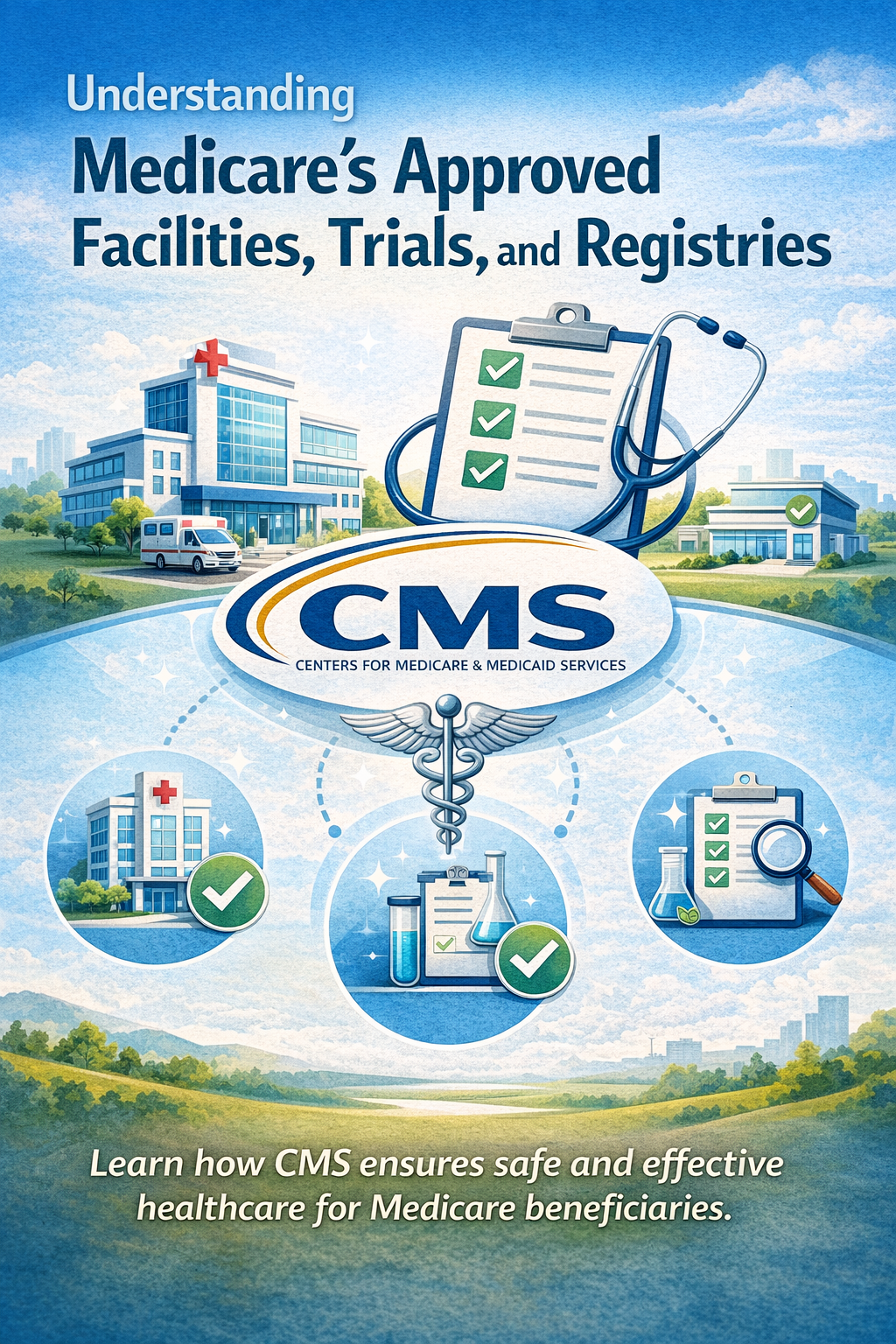
Understanding Medicare's Approved Facilities, Trials, and Registries
The Centers for Medicare & Medicaid Services (CMS) plays a crucial role in determining which healthcare facilities, clinical trials, and registries are approved for Medicare coverage. This approval is vital for ensuring that Medicare beneficiaries have access to safe and effective medical treatments and interventions.
Medicare, a federal health insurance program primarily for people aged 65 and older, covers a wide range of medical services. However, not all healthcare facilities or clinical trials automatically qualify for Medicare coverage. CMS evaluates and approves certain facilities and trials to ensure they meet specific standards of care and efficacy.
Approved Facilities
Approved facilities are healthcare providers that have met CMS’s stringent criteria for delivering high-quality care. These facilities include hospitals, nursing homes, and outpatient centers, among others. Approval is based on factors such as the quality of care provided, patient outcomes, and compliance with federal regulations.
For Medicare beneficiaries, choosing an approved facility is important because it ensures that the care they receive is covered under their Medicare plan. This approval also signifies that the facility adheres to the best practices in healthcare delivery, which can lead to better patient outcomes.
Clinical Trials
Clinical trials are research studies that test new treatments or drugs to determine their safety and effectiveness. CMS approves certain clinical trials for Medicare coverage, allowing beneficiaries to participate without bearing the full cost. This approval is crucial for advancing medical research and providing patients with access to cutting-edge treatments.
To qualify for Medicare coverage, clinical trials must meet specific criteria, including relevance to Medicare beneficiaries and adherence to ethical standards. Participation in approved clinical trials can offer patients access to new therapies that are not yet widely available.
Registries
Registries are organized systems that collect data on patients receiving specific treatments or interventions. These databases help track the long-term effectiveness and safety of medical procedures and medications. CMS-approved registries are integral to improving healthcare quality and patient safety.
By participating in an approved registry, healthcare providers contribute valuable data that can influence future medical guidelines and policies. For patients, being part of a registry can mean receiving more personalized and informed care based on the latest research findings.
The Approval Process
The approval process for facilities, trials, and registries involves thorough evaluation by CMS. This includes reviewing the facility’s compliance with federal standards, the scientific validity of clinical trials, and the data management practices of registries. CMS aims to ensure that approved entities provide high-quality care and contribute to the advancement of medical knowledge.
Facilities and researchers seeking approval must submit detailed applications demonstrating their ability to meet CMS’s criteria. This process is designed to safeguard patient interests and promote transparency in healthcare delivery.
Impact on Patients
For Medicare beneficiaries, accessing approved facilities, trials, and registries means receiving care that is both covered by their insurance and aligned with the latest medical standards. This can lead to better health outcomes and more efficient use of healthcare resources.
Patients participating in approved clinical trials or registries also have the opportunity to contribute to medical research, potentially benefiting others with similar health conditions in the future.
Sources
- Approved facilities, trials, & registries - This CMS page provides detailed information on the approval process and criteria for Medicare-covered facilities, trials, and registries.










Be the first to comment.