

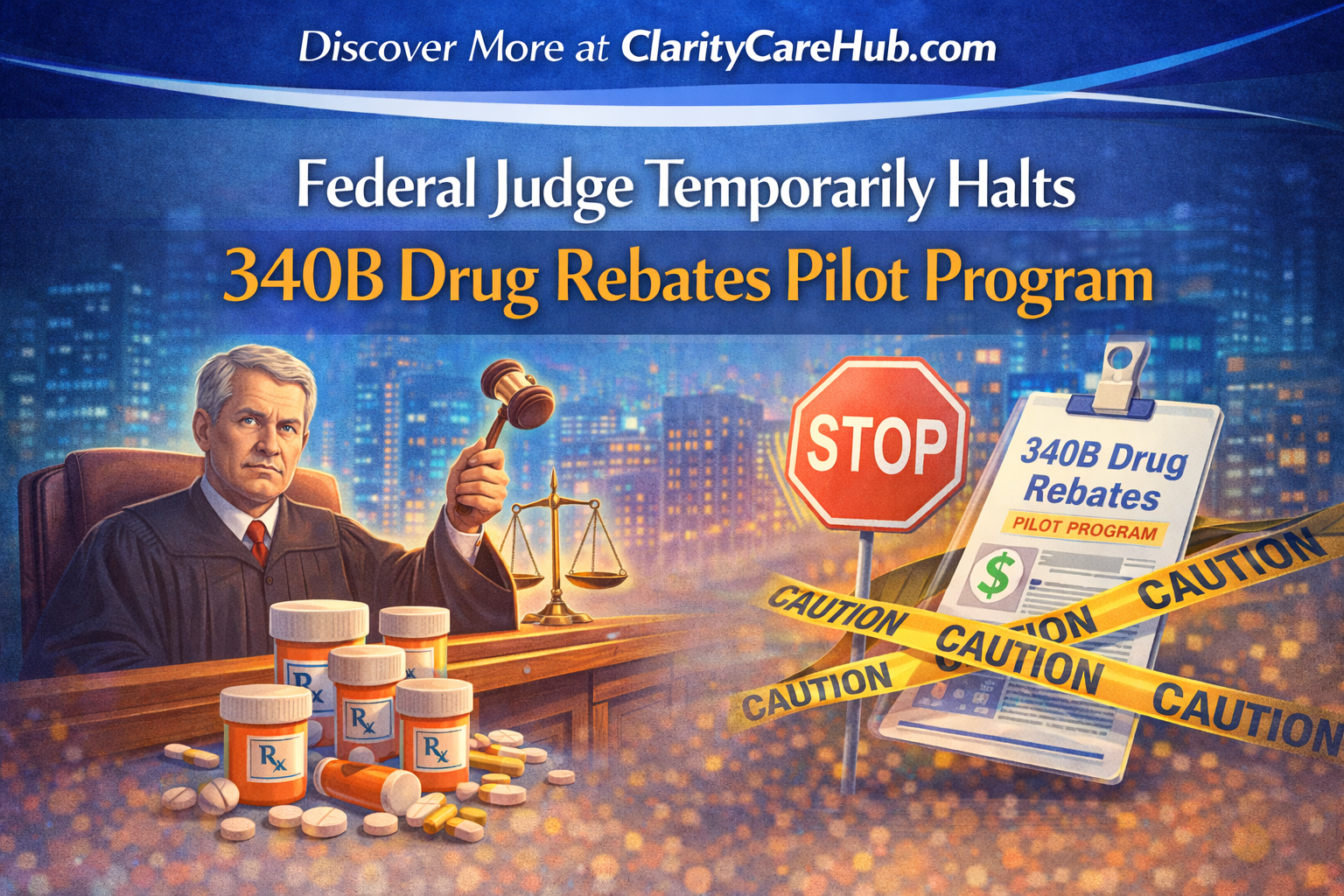
Federal Judge Temporarily Halts 340B Drug Rebates Pilot Program
A federal judge has issued a preliminary injunction to temporarily halt the implementation of a pilot program involving drug rebates under the 340B Drug Pricing Program. This decision comes amid legal challenges from pharmaceutical companies and healthcare providers who argue that the program could undermine the financial stability of hospitals and clinics serving low-income patients.
The 340B program, established in 1992, mandates that drug manufacturers provide outpatient drugs at significantly reduced prices to eligible healthcare organizations, such as hospitals and clinics that serve a large number of uninsured or low-income patients. The program aims to enable these facilities to stretch limited federal resources to better serve vulnerable populations.
The pilot program in question was designed to test a new rebate system that would alter how discounts are applied, potentially affecting the financial dynamics of the 340B program. Critics of the pilot argue that it could lead to reduced savings for healthcare providers, thereby impacting their ability to offer comprehensive services to patients in need.
According to the order issued by the judge, the preliminary injunction will remain in place while the court further examines the legality and implications of the pilot program. The decision reflects concerns that the pilot could disrupt established processes and financial arrangements that have been in place for years.
The pharmaceutical industry has been critical of the 340B program, asserting that it has expanded beyond its original intent and that some hospitals have been profiting from the discounts without passing savings on to patients. On the other hand, hospitals and clinics argue that the program is essential for maintaining financial viability and providing necessary services to underserved communities.
The legal challenge highlights ongoing tensions between drug manufacturers and healthcare providers over the 340B program's scope and implementation. The outcome of this case could have significant implications for the future of the program and the healthcare facilities that rely on it.
Sources
- Judge hits pause on 340B drug rebates pilot program - A federal judge has issued a preliminary injunction against the 340B drug rebates pilot program.








Be the first to comment.